Owlet Dream Duo 2 vs 3: Complete Comparison Guide
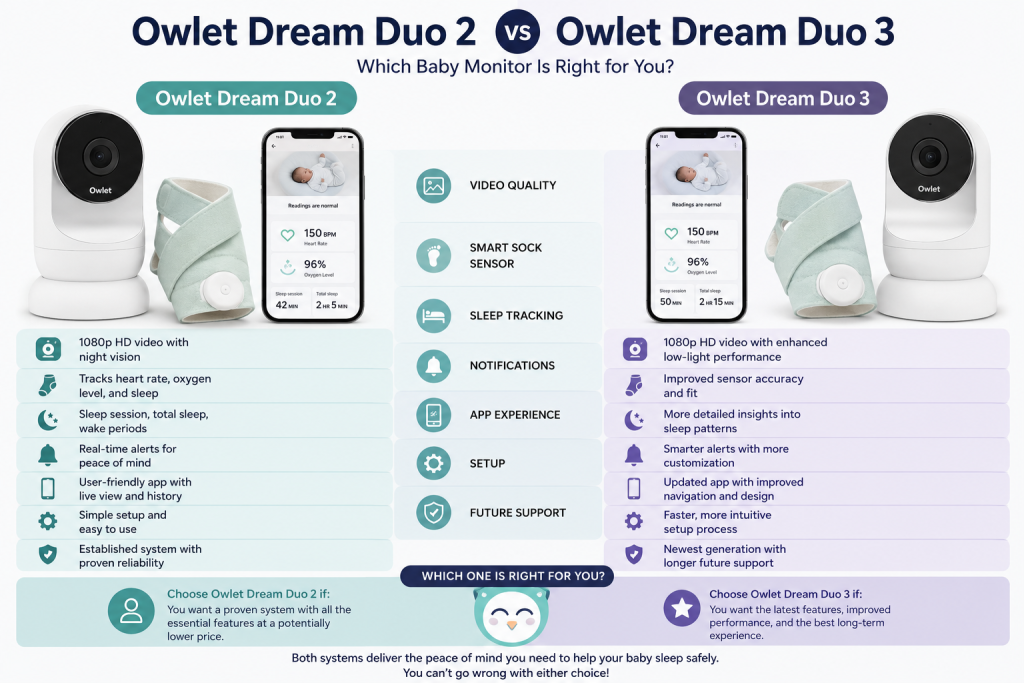
Owlet Dream Duo 2 On Amazon Owlet Dream Duo 3 On Amazon
When you become a parent, sleep becomes one of the biggest topics in your life. You start thinking about every little sound, movement, and moment during the night. A baby monitor can become one of those things that gives you a little extra confidence when you are trying to rest.
The Owlet Dream Duo 2 and Owlet Dream Duo 3 are two smart baby monitoring systems designed for parents who want more than just a basic camera. Instead of only seeing your baby, these systems focus on combining video monitoring with sleep tracking features to give parents more information about their baby’s sleep patterns.
At first glance, the Dream Duo 2 and Dream Duo 3 may seem almost identical. Both offer the Owlet camera experience and the famous wearable sock system. Both are designed around helping parents understand sleep and keep an eye on their baby without needing to constantly check the crib.
However, there are differences that can matter depending on what you expect from a baby monitor. Some parents want the newest technology available, while others are looking for the best value. Some are upgrading from an older Owlet model, while others are buying their first smart baby monitor.
This comparison will break down the Owlet Dream Duo 2 vs Dream Duo 3, including design, features, ease of use, comfort, app experience, reliability, and whether upgrading is actually worth it.
What Is The Owlet Dream Duo System?
The Owlet Dream Duo is a combination baby monitoring system. It includes a camera and a wearable sock that goes on your baby’s foot.
The idea behind the system is simple. The camera lets you see and hear your baby, while the sock tracks certain sleep related information. Instead of only reacting when your baby cries, you can get a better picture of how your baby is sleeping.
Many parents like this approach because newborn sleep can feel unpredictable. Babies wake up often, move around, make noises, and sometimes parents find themselves checking the crib repeatedly.
A smart monitor can help reduce some of that stress by giving parents access to information without disturbing the baby.
The Dream Duo line is aimed at parents who want a premium experience rather than a basic audio or video monitor.
Owlet Dream Duo 2 Overview
The Owlet Dream Duo 2 became popular because it combined the convenience of a camera with wearable sleep tracking.
The camera provides a view of the nursery while the sock collects sleep information. The system is designed to work through the Owlet app, allowing parents to check on their baby from their phone.
One of the biggest selling points of the Dream Duo 2 is the combination of features. Many baby monitors only provide video, but the Dream Duo 2 tries to provide a complete sleep monitoring experience.
Parents often appreciate the ability to see what is happening without entering the room. Every time a parent opens the door or turns on a light, there is a chance of waking a sleeping baby. Having a camera and app can make nighttime checks easier.
The Dream Duo 2 also focuses on comfort. A wearable device for a baby needs to be lightweight and not interfere with normal movement. The sock design allows babies to wear it while sleeping without needing bulky equipment.
For many families, the Dream Duo 2 became a popular choice because it balanced technology with convenience.
Owlet Dream Duo 3 Overview
The Owlet Dream Duo 3 builds on the same idea but with improvements aimed at creating a smoother experience.
The newer generation focuses on refining the system rather than completely changing what it does.
This is common with baby products. Manufacturers often take a successful design and improve small details that make daily use easier.
The Dream Duo 3 is designed to feel more modern. Improvements can include updates to hardware, software experience, setup process, and overall usability.
For new parents buying their first smart monitor, the Dream Duo 3 naturally becomes an attractive option because it represents the newer generation.
A newer model can also mean longer support and more future updates, which matters because parents may use these devices for years or pass them down to another child.
Design Differences
The physical design between the Dream Duo 2 and Dream Duo 3 is one area where many parents notice smaller changes rather than dramatic differences.
The goal of both systems is the same. They need to be comfortable for the baby and simple for the parent.
The camera design is meant to fit into a nursery environment without becoming complicated. Most parents do not want something that requires a lot of adjustment every night.
The wearable sock is one of the most important parts because it needs to stay secure while the baby sleeps.
A good baby wearable needs to handle movement. Babies kick, roll, stretch, and move constantly. If the device is uncomfortable, parents may stop using it.
The Dream Duo 3 focuses on making the overall experience feel more polished. Small improvements in materials, fit, or software interaction can make a difference during daily use.
Camera Experience
The camera is a major part of both systems.
A baby monitor camera needs to provide a clear view of the crib, especially at night.
Both models are designed to let parents check in from their phone. This is useful when you are in another room, cooking, working, or trying to sleep yourself.
Night vision is important because most baby monitoring happens after dark. A camera that works well in low light can make nighttime checks much easier.
The Dream Duo 3 may appeal more to parents who want the latest version of the camera experience, while Dream Duo 2 owners may find that their current setup already does what they need.
For many parents, the camera quality is not the deciding factor. The bigger question is whether they want the newer system or whether the older one already meets their needs.
The Smart Sock Comparison
The sock is what separates Owlet from many traditional baby monitors.
Instead of only watching video, the wearable tracks information related to sleep.
Parents often like this because babies do not always cry when something changes. Sometimes a parent simply wants reassurance that everything looks normal.
The Dream Duo 2 and Dream Duo 3 both use the smart sock concept.
The main improvements in newer versions are usually about making the system easier to use, more comfortable, and more reliable.
The sock needs to be charged, placed correctly, and maintained. Like any baby technology, it works best when parents understand how it is designed to be used.
A lot of the experience comes down to convenience. If something is annoying to set up every night, parents may stop using it. A smoother system can make a big difference.
App Experience
The app is where parents interact with the system.
A good app can make a complicated product feel simple.
Parents want quick access to the camera, sleep information, and settings without having to search through menus.
The Dream Duo line depends heavily on the app experience because the phone becomes the main control center.
The Dream Duo 3 benefits from being a newer generation, which usually means improvements in software and user experience.
However, existing Dream Duo 2 users may already be comfortable with their setup and may not feel a need to switch.
The best system is often the one that a parent actually enjoys using.