Click here to get alimentum Click Here To Get Elecare
Choosing the right baby formula can feel overwhelming, especially when a baby is struggling with feeding issues, digestive discomfort, allergies, or sensitivity to milk proteins. Parents often find themselves comparing specialized formulas and trying to understand the differences between options like Alimentum and EleCare.
Both Alimentum and EleCare are designed for babies who need something different from standard infant formula. They are often recommended when babies have problems tolerating regular formulas, but they work in different ways.
While both formulas are considered hypoallergenic, they are not identical. They have different protein structures, different purposes, different costs, and they may work better for different babies.
This comparison will break down the differences between Alimentum and EleCare, helping parents understand what makes each formula unique and why one might be chosen over the other.
Understanding Alimentum
Similac Alimentum is a specialized infant formula designed for babies who have difficulty tolerating regular cow’s milk based formulas. It is made by breaking down milk proteins into smaller pieces so that they are easier for sensitive digestive systems to handle.
The main idea behind Alimentum is protein breakdown.
Regular formulas contain larger milk proteins. Some babies have trouble processing these proteins because their immune system reacts to them or their digestive system struggles with them. Alimentum uses extensively hydrolyzed protein, meaning the protein has already been broken down into smaller fragments.
For many babies with mild to moderate cow’s milk protein sensitivity, this can make a major difference.
Parents often look into Alimentum when they notice symptoms such as excessive crying after feeds, stomach discomfort, gas, diarrhea, vomiting, or signs that their baby is uncomfortable after drinking regular formula.
One of the reasons Alimentum is popular is because it is often considered a first step when moving away from standard formula.
Understanding EleCare
EleCare is also a specialized hypoallergenic formula, but it takes a different approach.
Instead of using broken down milk proteins, EleCare uses amino acids as its protein source. Amino acids are the simplest building blocks of protein.
This means the formula does not contain intact milk proteins or even larger broken down protein chains. The body receives the individual amino acids directly.
Because of this, EleCare is often used for babies who have more severe protein allergies or who do not improve on extensively hydrolyzed formulas.
For some babies, even the small protein fragments in formulas like Alimentum may still trigger a reaction. In these situations, an amino acid based formula may be considered.
EleCare is often viewed as a more specialized option for babies with significant feeding challenges.
Alimentum vs EleCare Protein Differences
The biggest difference between these two formulas is the protein source.
Alimentum uses extensively hydrolyzed casein protein.
This means the original milk protein has been broken apart into much smaller pieces. The goal is to reduce the chance of the immune system reacting while still providing a formula based on milk protein.
EleCare uses free amino acids.
Instead of giving the body pieces of protein, it provides the individual components needed to build and use protein.
Think of it like this.
A regular formula is like giving someone a large puzzle.
Alimentum breaks the puzzle into smaller sections.
EleCare gives the individual puzzle pieces separately.
The further the protein is broken down, the less likely some babies are to react.
Which Formula Is Better for Allergies?
The answer depends on the severity of the baby’s condition.
Alimentum may work well for babies with:
Cow’s milk protein sensitivity
Mild allergic reactions
Digestive discomfort
Colic related to formula intolerance
Some feeding issues related to protein sensitivity
EleCare may be chosen for babies with:
More severe cow’s milk protein allergy
Multiple food protein allergies
Certain gastrointestinal conditions
Babies who do not respond to extensively hydrolyzed formulas
Amino acid formulas are generally considered a more advanced option because they remove nearly all protein structures that could trigger reactions.
However, more advanced does not automatically mean better for every baby.
Some babies do perfectly well on Alimentum and do not need an amino acid formula.
Taste Differences Between Alimentum and EleCare
Taste is something many parents do not expect to be a major factor, but it matters.
Specialized formulas often taste different from standard formulas because the protein structure has changed.
Alimentum can have a different taste compared with regular formulas. Some parents describe it as having a slightly unusual flavor, but many babies adjust.
EleCare is also known for having a distinct taste. Because it uses amino acids instead of regular protein, some babies may notice the difference.
A baby who accepts one formula may refuse another simply because the taste is different.
This is why transitioning slowly can sometimes help.
Cost Comparison
Another major difference between Alimentum and EleCare is cost.
Specialized formulas are generally more expensive than standard infant formulas because they require additional processing.
Alimentum is usually less expensive than amino acid based formulas.
EleCare is typically more expensive because amino acid formulas require a more advanced manufacturing process.
For families who need these formulas long term, the price difference can become significant.
Some families may have insurance coverage or assistance programs available depending on where they live and their situation.
Digestive Comfort
Many parents choose these formulas because they hope their baby will become more comfortable after feeding.
Alimentum may help babies who struggle with normal formula because the protein is easier to digest.
EleCare may help babies who react even to smaller protein fragments.
Neither formula works the same way for every baby.
Some babies improve quickly after switching. Others may need time, adjustments, or medical guidance to find the right option.
A formula that works wonderfully for one baby may not work for another.
Transitioning From Regular Formula
Switching formulas can sometimes cause temporary changes.
Parents may notice differences in:
Stool color
Stool smell
Gas
Feeding patterns
Acceptance
These changes do not always mean the formula is not working.
A baby’s digestive system may need time to adjust.
Some parents switch gradually by mixing old and new formula, while others switch directly depending on their baby’s needs and medical recommendations.
The important thing is watching how the baby responds.
Alimentum Ready To Feed vs Powder
Alimentum is available in different forms, including powder and ready to feed options.
Ready to feed formulas are convenient because they require no mixing. They can be especially useful for parents who are traveling or dealing with late night feedings.
Powder versions are often more economical.
The choice usually comes down to convenience, budget, and personal preference.
EleCare Powder and Specialized Feeding
EleCare is commonly available as a powder formula.
Because it is designed for babies with more complex feeding needs, it is often used under guidance from healthcare professionals.
Some babies who cannot tolerate other formulas may do well on EleCare because the amino acid structure reduces exposure to possible triggers.
Final Thoughts on Alimentum vs EleCare
Alimentum and EleCare are both valuable formulas for babies who need something beyond standard infant formula.
Alimentum focuses on extensively broken down milk protein and is often used for babies with sensitivity or moderate intolerance.
EleCare goes further by using amino acids and is often considered when allergies are more severe or when other hypoallergenic formulas do not work.
The best choice depends on the individual baby.
A formula is not simply about ingredients on the label. It is about how a baby responds, grows, digests, and feels after feeding.
For many families, finding the right formula takes patience and observation. The goal is always the same: finding something that allows the baby to feed comfortably and thrive.
Alimentum vs EleCare: Detailed Comparison
When parents compare Alimentum and EleCare, they are usually not just looking at ingredients. They are trying to solve a real problem. Their baby may be uncomfortable, refusing feeds, crying after eating, or dealing with symptoms that make feeding stressful.
Both formulas exist for babies who need extra support, but the difference between them comes down to how the proteins are handled.
Ingredient Differences Between Alimentum and EleCare
The ingredients are where the biggest difference appears.
Alimentum uses extensively hydrolyzed protein. The milk protein is broken down into very small pieces. The goal is to make the protein easier for a sensitive digestive system to handle.
The formula still comes from milk protein, but the structure has been changed.
EleCare uses amino acids instead. Amino acids are the smallest parts of protein. The formula does not rely on broken down milk protein because it starts at the basic building blocks.
This makes EleCare different from many hypoallergenic formulas.
For babies with simple sensitivity, Alimentum may provide enough change.
For babies with stronger reactions, EleCare may be considered because it removes more of the protein structure that can cause problems.
Alimentum vs EleCare for Cow’s Milk Protein Allergy
Cow’s milk protein allergy is one of the biggest reasons parents look into specialized formulas.
A baby with this issue may react to proteins found in regular formulas.
Symptoms can include:
Skin irritation
Digestive upset
Excessive crying
Changes in bowel movements
Vomiting
Poor feeding
Alimentum is often tried because many babies with cow’s milk protein sensitivity respond well to extensively hydrolyzed formulas.
However, some babies still react because tiny protein fragments remain.
EleCare removes that concern by using amino acids instead of protein chains.
This is why amino acid formulas are often considered when a baby does not improve with an extensively hydrolyzed formula.
Which One Is Easier to Digest?
Digestibility is one of the main reasons these formulas exist.
A regular formula requires the baby’s digestive system to break down larger proteins.
Alimentum does part of that work before the baby drinks it.
EleCare goes even further by providing amino acids that are already in their simplest form.
Some parents notice improvement after switching to Alimentum. Others only see changes after moving to an amino acid formula.
Every baby responds differently.
A formula that seems perfect on paper may not work for every child.
Taste and Baby Acceptance
One thing many parents discover is that specialized formulas do not always taste like regular formula.
The process used to make these formulas changes the flavor.
Alimentum has a different taste compared with standard formulas. Some babies accept it quickly, while others need time.
EleCare can have a stronger difference in taste because amino acid based formulas have a unique flavor.
A baby who refuses one formula may accept another.
This can become frustrating for parents because the formula may be medically suitable but difficult to get the baby to drink.
Sometimes patience and gradual transitions help.
Smell Differences
Parents often mention smell when discussing hypoallergenic formulas.
Hydrolyzed proteins and amino acid formulas can have a different smell compared with standard formulas.
This does not mean the formula is bad or unsafe.
The smell comes from the way the proteins are processed.
Many parents describe specialized formulas as having a stronger or unusual odor.
Babies usually care more about taste and comfort than smell.
Cost Comparison
Cost is a major factor when choosing between Alimentum and EleCare.
Alimentum is usually more affordable because the manufacturing process is less intensive compared with amino acid formulas.
EleCare tends to cost more because creating a formula based on individual amino acids requires a more specialized process.
For families using formula occasionally, the difference may not feel large.
For families relying on specialized formula for months, the cost can become a major consideration.
Convenience
Both formulas come in forms designed for parents’ daily routines.
Ready to feed options can be convenient for travel, nighttime feeding, or situations where mixing powder is difficult.
Powder options are often preferred because they can be more economical.
The best choice depends on what works for the family.
A formula that is slightly easier to prepare can make a big difference when parents are already dealing with feeding challenges.
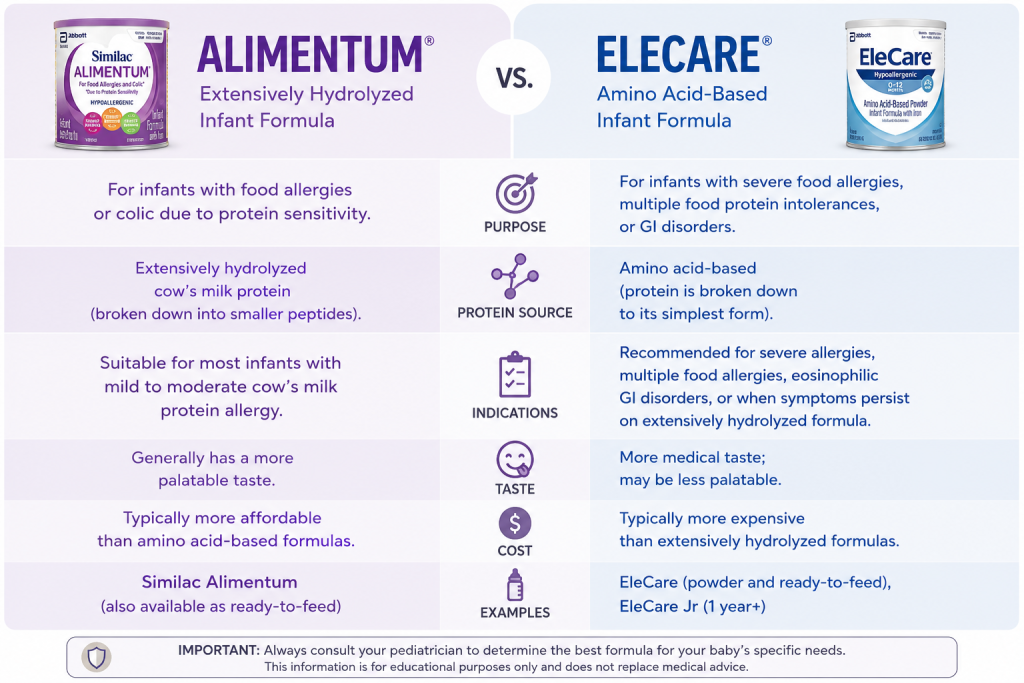
Alimentum vs EleCare Comparison Table
| Category | Alimentum | EleCare |
|---|---|---|
| Formula type | Extensively hydrolyzed formula | Amino acid based formula |
| Protein source | Broken down milk protein | Individual amino acids |
| Designed for | Protein sensitivity and allergies | More severe allergies and intolerance |
| Protein structure | Small peptides | No protein chains |
| Taste | Different from regular formula | Often more noticeable difference |
| Cost | Usually lower | Usually higher |
| Digestive support | Good for many sensitive babies | Designed for babies needing advanced support |
| Common use | First hypoallergenic option | When other formulas fail |
Can You Switch From Alimentum to EleCare?
Some babies start with Alimentum and later move to EleCare.
This usually happens when symptoms continue.
A parent may notice that their baby improved slightly but still has feeding problems.
In that case, a healthcare provider may suggest trying an amino acid based formula.
The reverse can also happen.
Some babies start with a very specialized formula and later transition to a less specialized option as their digestive system matures.
Babies change quickly, and their feeding needs can change too.
Mixing Alimentum and EleCare
Parents sometimes wonder if they can mix the formulas.
The answer depends on the reason the baby is using the formula.
Some families transition gradually by combining formulas.
Others may need a complete switch depending on the baby’s reaction.
The important thing is making sure the baby continues receiving proper nutrition during the change.
Which Formula Is Better Overall?
There is no universal winner between Alimentum and EleCare.
They are designed for different situations.
Alimentum is often a practical choice for babies who need a gentler formula with broken down protein.
EleCare is a more specialized option for babies who need protein in its simplest form.
The better formula is the one that allows the baby to feed comfortably, digest well, and grow properly.
A more expensive formula is not automatically better.
A more advanced formula is not automatically necessary.
The right formula depends on the baby.
Parent Experience Matters
Parents often share that choosing formula can feel like trial and error.
They may spend weeks watching feeding patterns, digestion, sleep, and comfort.
The goal is not finding the most popular formula.
The goal is finding the formula that works for that specific baby.
A baby who struggles with one formula may thrive on another.
Small changes can sometimes create noticeable improvements.
Final Thoughts
Alimentum and EleCare are both important options for babies who cannot tolerate standard formula.
Alimentum offers extensively broken down protein designed for easier digestion.
EleCare removes protein chains completely and uses amino acids instead.
For mild to moderate sensitivity, Alimentum may be enough.
For stronger allergies or babies who do not respond to hydrolyzed formulas, EleCare may be considered.
The journey to finding the right formula can take time, but understanding the differences makes the decision easier.
The best formula is the one that helps the baby feel comfortable, stay nourished, and continue growing.